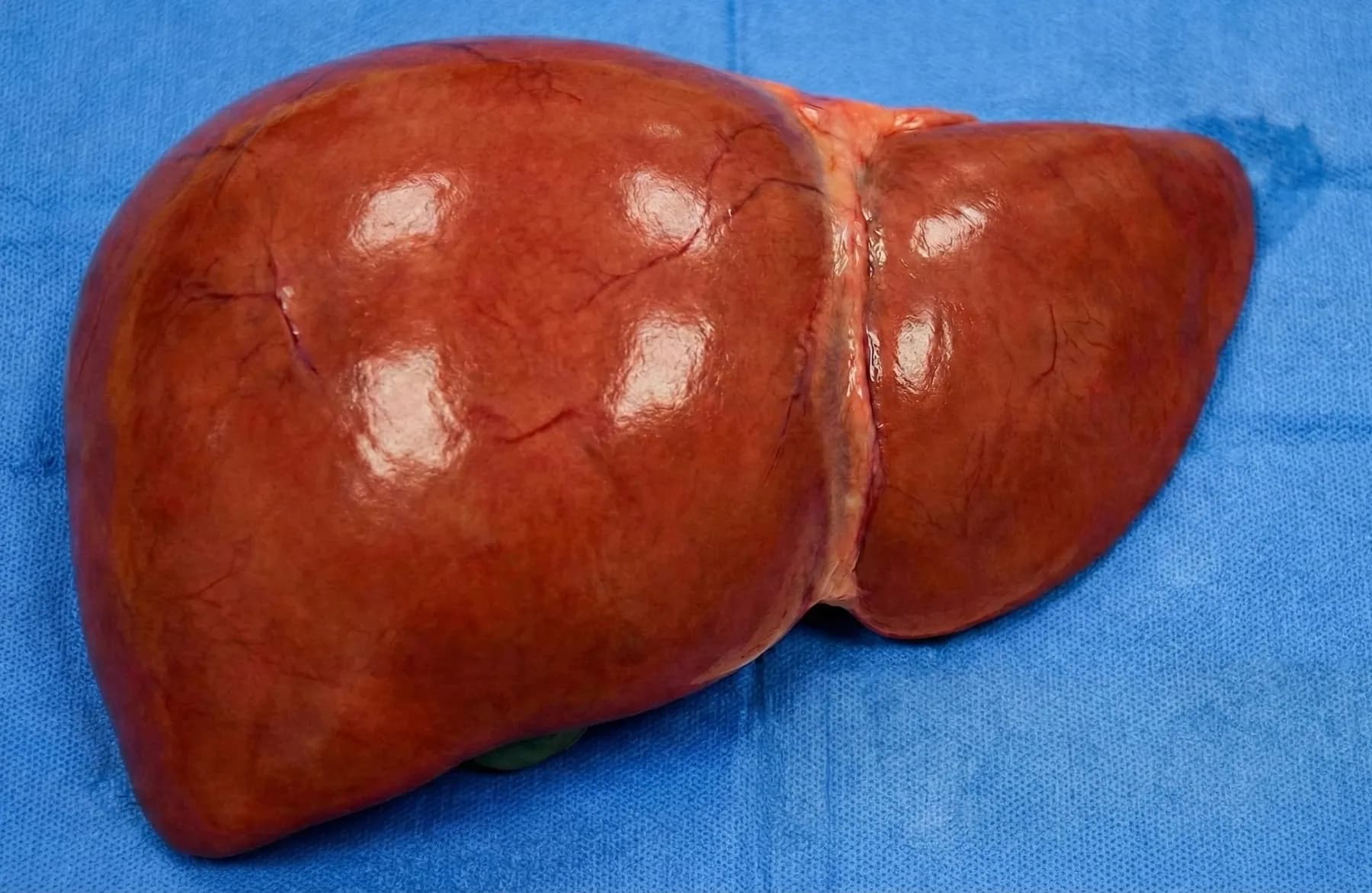
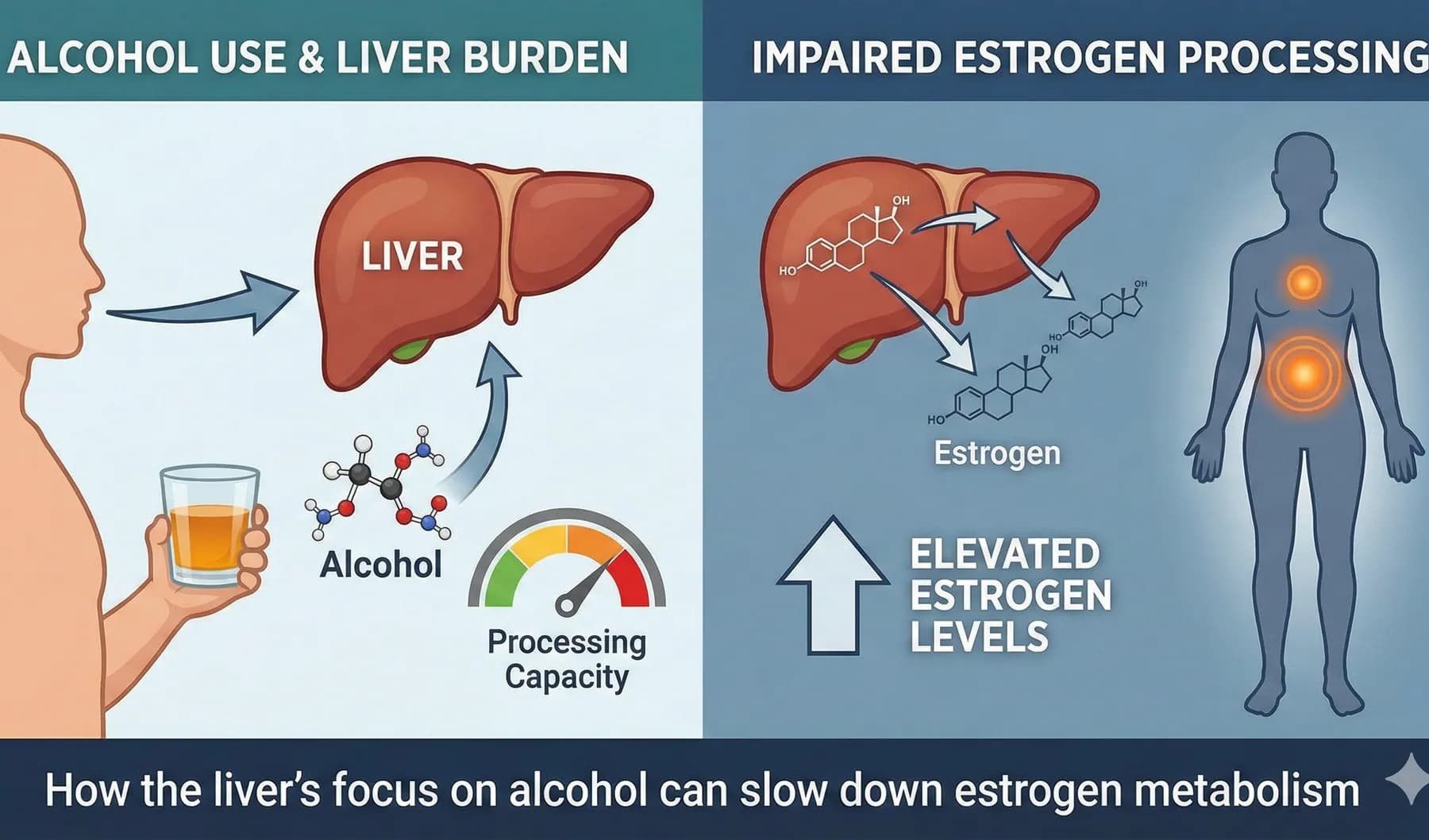
How Your Liver Affects Cortisol (And Why Testing Both Matters)
By Alan Farrell4 min read

A two-way stress-liver connection
Your liver helps clear and regenerate cortisol. At the same time, chronic stress patterns can increase insulin resistance, visceral fat and liver stress.
Stress and poor sleep Can alter cortisol patterns
→
Metabolic strain Can increase insulin resistance and visceral fat
→
Liver stress Can disrupt normal cortisol metabolism
The Cortisol-Liver Connection
Your liver plays several roles in cortisol metabolism:
1
Cortisol clearance
The liver metabolizes cortisol through enzymes like 5α-reductase, converting it to inactive forms for elimination.
2
Cortisol regeneration
An enzyme called 11β-HSD1 in liver tissue can convert inactive cortisone back into active cortisol. This pathway becomes overactive in fatty liver disease.
3
HPA axis feedback
Liver dysfunction may influence signaling pathways involved in stress regulation and inflammation.
Check the liver side of the cycle
Measure ALT, AST and GGT now, then track whether changes to sleep, stress, alcohol or metabolic health move your markers.
Test core liver markers See the broader picture
LIVER15 automatically applied · $15 off standard · LIVER30 automatically applied · $30 off comprehensive

How Fatty Liver Elevates Cortisol
Studies show that people with MASLD have chronic HPA axis overactivity. One study found 24-hour urinary cortisol levels of 149 nmol/day in MASLD patients compared to 90 nmol/day in controls. That's a 65% increase.
The relationship between cortisol and fatty liver progresses through stages:
65%
higher 24-hour urinary cortisol in the MASLD group described in the study: 149 nmol/day compared with 90 nmol/day in controls.
Earlier stage
Early MASLD
The liver clears cortisol faster than normal, which triggers the HPA axis to produce more cortisol to compensate.
More advanced stage
Advanced MASLD
The liver begins regenerating more cortisol from cortisone via 11β-HSD1. Cortisol levels in liver tissue rise, promoting more fat storage and inflammation.
Research also shows that cortisol levels correlate with fibrosis stage in liver disease. Higher cortisol is associated with more advanced liver damage.
Liver dysfunction may influence signaling pathways involved in stress regulation and inflammation.
Sleep, Cortisol, and Liver Health
Sleep disruption is one of the biggest drivers of both cortisol imbalance and metabolic dysfunction.
Poor sleep may contribute to:
elevated evening cortisol
increased insulin resistance
increased appetite and cravings
impaired glucose regulation
higher visceral fat accumulation
worsening liver fat over time
Circadian rhythm disruption - including shift work, inconsistent sleep schedules, or chronic sleep deprivation - has also been associated with increased risk of MASLD and metabolic syndrome.
This is why sleep quality often affects:
stress resilience
energy levels
blood sugar regulation
liver markers simultaneously.
How Chronic Stress Damages the Liver
The feedback loop works the other way too. Chronic stress, poor sleep, insulin resistance, and elevated cortisol patterns may contribute to metabolic dysfunction and liver fat accumulation over time.
Cortisol rises Blood sugar and insulin resistance increase
Insulin resistance Drives fat accumulation in the liver
Visceral fat grows Releases fatty acids directly to the liver
Inflammation builds Chronic stress damages liver cells
This is why "stress eating" and poor sleep often show up in liver enzyme tests over time. The liver is absorbing the impact of chronic stress even when you don't feel symptoms.
| Marker | What It Tells You |
|---|---|
| ALT | Liver cell stress (men <55 U/L, women <45 U/L optimal) |
| GGT | Oxidative stress and metabolic health (men <14 U/L, women <9 U/L optimal) |
| Morning Cortisol | Stress hormone baseline (6–18 μg/dL optimal in the morning) |
| DHEA-S | Counter-regulatory stress hormone that supports cortisol balance |
The cortisol-to-DHEA-S ratio is particularly useful. High cortisol with low DHEA-S suggests chronic HPA axis activation and prolonged stress. If liver enzymes are also elevated, it suggests the stress-liver feedback loop may be active.
Measure the liver markers in the loop
The Liver Function Test tracks ALT, AST and GGT. The Comprehensive Liver Test adds metabolic markers that can provide more context around insulin resistance and liver fat.
Test core liver markers Test the broader picture
LIVER15 automatically applied · $15 off standard · LIVER30 automatically applied · $30 off comprehensive

What You Can Do
If your cortisol is elevated and your liver enzymes are abnormal, you may be dealing with the stress-liver cycle. Addressing one side often helps the other:
1
Stress reduction
Sleep, meditation, exercise can reduce cortisol and liver stress.
2
Improving liver health
Reducing alcohol, weight loss can normalize cortisol metabolism.
3
DHEA-S support
May help rebalance the cortisol-DHEA ratio.
4
Alcohol reduction
Alcohol reduction supports healing of the liver enzymes, especially GGT.
If your cortisol is high but liver enzymes are normal, the stress response may not yet be affecting your liver, or you may have good metabolic resilience. Either way, managing stress remains important for long-term health.
Testing both systems helps you see the full picture.
A liver baseline gives you objective data to compare with cortisol and DHEA-S, then track whether changes to sleep, stress, alcohol or metabolic health are moving your numbers.
Start with core liver markers Measure the broader picture
LIVER15 automatically applied · $15 off standard · LIVER30 automatically applied · $30 off comprehensive