10 Foods That Naturally Boost Progesterone Levels with Zinc and Magnesium
By Alan Farrell2 min read

Progesterone is one of the most important hormones in reproductive health, and it also shapes ovulation, sleep, mood and menstrual cycle regulation. No single food boosts it overnight, but nutrition plays a real role in supporting the systems that produce it: stress regulation, metabolic health and ovulatory function.
Progesterone is produced mainly after ovulation, during the luteal phase. That's why healthy levels depend so heavily on consistent ovulation, adequate nutrient intake, stable blood sugar, sleep and overall hormonal balance rather than on any one ingredient.
What progesterone does
Its main jobs
- Supporting ovulation and fertility
- Preparing the uterine lining for pregnancy
- Balancing estrogen through the cycle
- Supporting sleep and mood
- Regulating menstrual cycles
- Supporting healthy pregnancy
Signs levels may be low
- Irregular cycles
- Heavy periods
- Spotting before periods
- Sleep issues
- Mood changes
- PMS symptoms
- Difficulty conceiving
Progesterone declines naturally in perimenopause As ovulation becomes less consistent, progesterone falls with it. That's expected rather than a problem to fix, though it explains why cycle and sleep changes often appear together during this period.
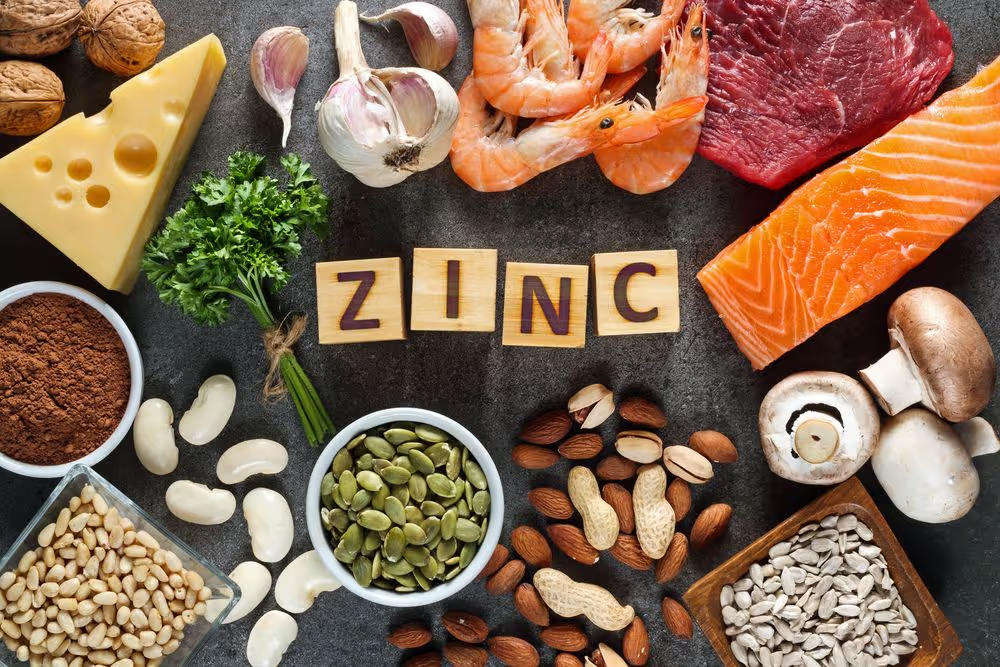
10 foods that support hormone production
These are all sources of magnesium, zinc or both, the two minerals most involved in the systems behind hormone production.
01
Spinach
Magnesium
A nutritional powerhouse packed with magnesium, which is involved in regulating hormone production. An easy daily addition through salads, eggs or smoothies.
02
Almonds
Zinc and magnesium
A good source of both minerals, which work together in supporting hormonal balance. Convenient enough to eat consistently, which matters more than any single serving.
03
Pumpkin seeds
Zinc
Rich in zinc. Sprinkle them on salads or yogurt, or eat them on their own as a snack.
04
Avocado
Zinc and magnesium
Contains both minerals alongside healthy fats, which matter independently for hormone production. Works in salads, on toast or blended into a smoothie.
05
Dark chocolate
Zinc and magnesium
In moderation, dark chocolate contributes magnesium and zinc, and many people find it helps with mood and stress, which are themselves part of the hormonal picture.
06
Bananas
Magnesium
A reliable magnesium source and about as portable as food gets, which makes consistent intake realistic.
07
Quinoa
Zinc and magnesium
A versatile whole grain carrying both minerals. Works as a salad base, a side dish or a breakfast bowl.
08
Lean meats
Zinc
Chicken and turkey are high in zinc, which the body uses in producing and regulating hormones. They also cover the protein intake that underpins hormone production more broadly.
09
Fatty fish
Magnesium and omega-3s
Salmon, mackerel and trout provide magnesium alongside omega-3 fatty acids, which help reduce inflammation.
10
Chia seeds
Zinc and magnesium
Loaded with both minerals plus healthy fats and fiber, the latter of which supports the blood sugar stability that hormone production depends on. Mix into yogurt, oatmeal or a chia pudding.
What actually moves progesterone
Diet is one input among several, and for most people it isn't the biggest one. These factors influence progesterone production more directly.
The bigger levers
Nutrition supports these systems. It rarely overrides them.
- Chronic stress and elevated cortisol
- Poor sleep
- Under-eating or restrictive dieting
- Excessive exercise or overtraining
- Insulin resistance
- PCOS
- Perimenopause
- Inflammation
- Nutrient deficiencies
How to check your levels
Symptoms alone cannot reliably confirm low progesterone. The symptom list overlaps heavily with thyroid issues, stress, poor sleep and perimenopause, which is why a number is more useful than a self-assessment.
Testing gives more insight when progesterone is read alongside estradiol, LH, FSH, testosterone, cortisol and thyroid markers, since those results give the progesterone number its context.
Timing matters too. Progesterone is typically measured during the luteal phase, after ovulation. And tracking change over time tends to be more meaningful than a single isolated result.

Final thoughts
No food boosts progesterone overnight. What a nutrient-dense diet can do is support ovulation, metabolic health, stress regulation and sleep, which together create the conditions for healthy hormone production.
Focusing on these is usually more impactful than relying on individual hormone-boosting foods.
Adequate protein
Healthy fats
Magnesium-rich foods
Blood sugar balance
Sleep
Stress management
If you're dealing with persistent symptoms related to hormone imbalance, cycle irregularity or fertility concerns, discuss testing and hormone evaluation with a healthcare professional.
13 biomarkers · Tasso upper-arm collection
Women's Longevity Panel
Progesterone read alongside the hormone, thyroid and metabolic markers that give it context, from one at-home sample.
- Hormones : Progesterone, estradiol, total testosterone, free testosterone, SHBG
- Thyroid : TSH
- Cardiovascular : Total cholesterol, LDL, HDL, triglycerides
- Blood and kidney : Hemoglobin, hematocrit, creatinine
$195
At-home collection. Results in 3 to 5 business days.
This article is for informational purposes and is not a substitute for medical advice, diagnosis or treatment. Progesterone results depend on where you are in your cycle and should be interpreted by a healthcare provider alongside your symptoms and history. If you are pregnant, trying to conceive, or managing a diagnosed hormonal condition, speak with your provider before making dietary changes.