VLDL Cholesterol: Steps to Calculate, and What Your Levels Mean
By Daniel Montville7 min read

How to Calculate VLDL Cholesterol
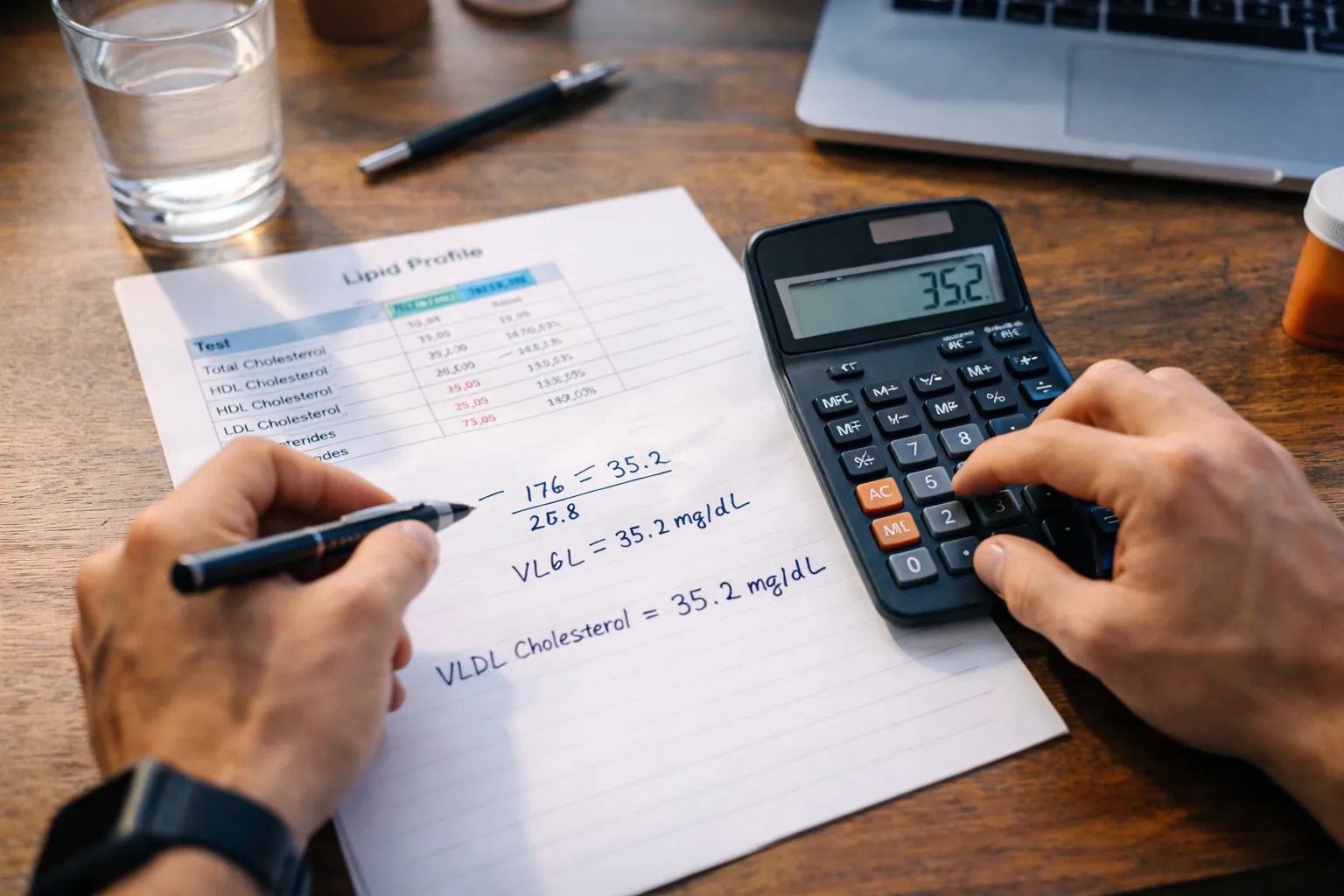
VLDL cannot be measured directly with a standard blood test. Instead, labs calculate it from your triglyceride level using this formula:
VLDL = Triglycerides ÷ 5
For example, if your triglycerides are 120 mg/dL:
120 ÷ 5 = 24 mg/dL (VLDL)
This calculation works because VLDL particles carry roughly five times as many triglycerides as cholesterol. However, the formula becomes less accurate when triglycerides exceed 400 mg/dL. In those cases, your provider may use a direct LDL test instead.
What Is VLDL Cholesterol?
VLDL stands for very-low-density lipoprotein. Your liver produces VLDL particles and releases them into your bloodstream to transport triglycerides (a type of fat) to tissues throughout your body.
The "very low density" refers to how tightly packed the particles are. VLDL particles contain about 90% fat and 10% protein, making them less dense than other lipoproteins like LDL or HDL.
Here is how the main lipoproteins compare:
Lipoproteins and Their Roles
VLDL
Primary Cargo: Triglycerides
Role: Delivers fat from liver to tissues
LDL
Primary Cargo: Cholesterol
Role: Delivers cholesterol to cells
HDL
Primary Cargo: Cholesterol
Role: Removes excess cholesterol from arteries
Both VLDL and LDL are considered "bad" cholesterol because excess amounts contribute to plaque buildup in your arteries, a condition called atherosclerosis.
VLDL Cholesterol Normal Range
VLDL Cholesterol
Normal Range
Optimal: 2–30 mg/dL
Elevated: >30 mg/dL
• Below 30 mg/dL → Normal range • Above 30 mg/dL → Increased cardiovascular risk
Because VLDL is calculated from triglycerides, lowering your triglycerides automatically lowers your VLDL.
Why VLDL Matters for Your Health
High VLDL contributes to atherosclerosis in the same way LDL does. When excess VLDL particles circulate in your bloodstream, they can deposit fat and cholesterol on artery walls, forming plaque that narrows and hardens your arteries over time.
This increases your risk of:
- Heart disease
- Heart attack
- Stroke
- Peripheral artery disease
VLDL is also directly tied to metabolic health. High triglycerides and high VLDL often appear alongside insulin resistance, fatty liver, and elevated blood sugar. These markers tend to move together.
The Connection Between VLDL, Triglycerides, and Liver Health
Your liver produces VLDL particles. When the liver is overloaded with fat (from excess sugar, refined carbs, or alcohol), it produces more VLDL to shuttle that fat out into the bloodstream.
This is why people with non-alcoholic fatty liver disease (NAFLD) often have elevated triglycerides and VLDL. The liver is essentially exporting its excess fat.
Testing VLDL alongside liver enzymes like ALT and GGT gives you a clearer picture of metabolic function than cholesterol alone.
The Metabolic Connection
High VLDL often signals broader metabolic dysfunction. It frequently appears alongside elevated liver enzymes, insulin resistance, and abdominal fat. Testing these markers together catches problems earlier than any single test.
What Causes High VLDL Cholesterol?
Several factors can raise VLDL levels:
Diet high in refined carbohydrates and sugar - Excess sugar gets converted to triglycerides in the liver, which then packages them into VLDL particles.
Excess alcohol - Alcohol increases triglyceride production, which raises VLDL.
Obesity - Especially abdominal obesity, which is closely linked to metabolic dysfunction and higher VLDL production.
Sedentary lifestyle - Physical inactivity reduces your body's ability to clear triglycerides from the bloodstream.
Insulin resistance - When cells do not respond properly to insulin, triglyceride levels rise along with VLDL.
Genetics - Some people have familial hypertriglyceridemia, a genetic condition that causes the liver to overproduce VLDL.
How to Lower VLDL Cholesterol
Because VLDL is calculated from triglycerides, lowering your triglycerides is the most direct way to reduce VLDL.
1
Reduce refined carbohydrates and added sugars
Sugar converts directly to triglycerides in the liver. Cutting back is the fastest way to lower VLDL.
2
Limit alcohol intake
Alcohol significantly increases triglyceride production. Even moderate reduction can help.
3
Exercise regularly
Physical activity helps clear triglycerides from your bloodstream. Aim for 150 minutes per week.
4
Increase omega-3 fatty acids
Fatty fish, walnuts, and flaxseed can help lower triglycerides and support heart health.
5
Lose excess weight
Even 5-10% weight loss can significantly improve triglyceride and VLDL levels.
Most people see improvements in triglycerides and VLDL within 4-8 weeks of making consistent lifestyle changes.
VLDL vs LDL: What Is the Difference?
VLDL
Carries: Mainly triglycerides
Made by: Liver
Calculated from: Triglycerides
Normal: <30 mg/dL
Response: Quickly responds to diet changes
LDL
Carries: Mainly cholesterol
Forms from: VLDL breakdown
Measurement: Directly measured or calculated
Optimal: <100 mg/dL
Notes: May require medication if very high
Interestingly, VLDL particles can convert into LDL particles after they deliver their triglycerides. This is another reason high VLDL is concerning — it can lead to higher LDL over time.

How Often Should You Test VLDL?
VLDL is included in standard lipid panels, so you get this number whenever you check your cholesterol.
Testing frequency depends on your risk factors:
- Low risk, normal levels: Every 4-6 years
- Borderline levels or family history: Annually
- Elevated levels or making lifestyle changes: Every 3-6 months to track progress
- On lipid-lowering medication: As directed by your provider
Testing VLDL alongside other metabolic markers like liver enzymes, fasting insulin, and HbA1c gives you the most complete picture of your metabolic health.
Key Takeaways
- VLDL is a "bad" cholesterol that carries triglycerides from your liver to tissues
- Normal VLDL is below 30 mg/dL
- VLDL is calculated as triglycerides divided by 5
- High VLDL increases cardiovascular risk and often signals metabolic dysfunction
- Lowering triglycerides through diet, exercise, and lifestyle changes is the most effective way to reduce VLDL
- Testing VLDL alongside liver enzymes provides a more complete metabolic picture
Get Your Full Metabolic Picture
If you want to understand how your cholesterol, liver function, and metabolic markers are working together, Choose Health's Comprehensive Liver Panel includes lipid markers alongside liver enzymes and metabolic biomarkers in one at-home test.
This article is educational and not a substitute for medical advice. Talk to your clinician before making changes to your health plan.